Hybrid dentures - Implant-supported restorations
Overview
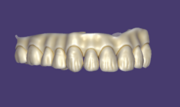
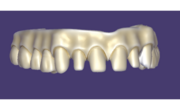
According to The Glossary of Prosthodontic Terms (2023, Journal of Prosthetic Dentistry), the term hybrid denture is “used to describe a removable or fixed denture that is composed of different materials, types of denture teeth (porcelain, plastic, composite resin), variable acrylic denture resins, differing metals or design, etc.” Dr. Carl Misch’s classification of implant-supported prostheses FP1, FP2, FP3, RP4, and RP5, remains widely used today. Below is a short overview with example:
Fixed Prosthesis (FP)
| Classification | Example | Main characteristics | Add-on modules | ||||||||
|---|---|---|---|---|---|---|---|---|---|---|---|
| FP1 | 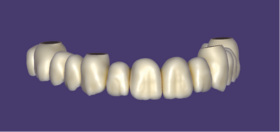 |
Fixed, teeth only. No pink tissue replacement. |
Implant Module | ||||||||
| FP2 | 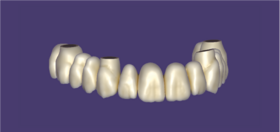 |
Fixed, teeth + part of the soft tissue. Longer crowns replace part of the root and soft tissue. |
Implant Module | ||||||||
| FP3 | 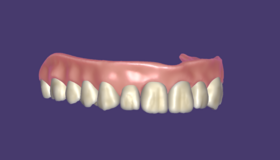 |
Fixed “hybrid” prosthesis. Teeth + significant soft-tissue replacement. |
Implant Module | ||||||||
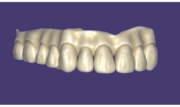
| FP3 variants |
| ||||||||||
Removable Prosthesis (RP)
| Classification | Example | Main characteristics | Add-on modules |
|---|---|---|---|
| RP4 |  |
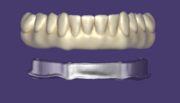
Implant-supported overdenture. Little or no mucosal load; typically on a bar or multiple stud attachments. |
Full Denture, Bar Module |
| RP5 | 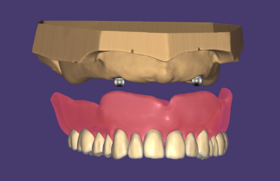 |
Implant- and tissue-supported overdenture. Common with stud, ball, or Locator-type attachments. |
Full Denture, Implant Module |